
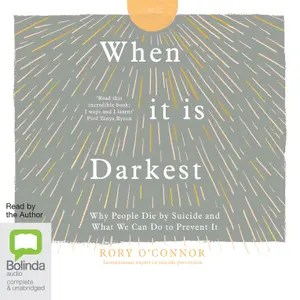
As a mental health professional specialising in suicide prevention and therapy, I found Rory O’Connor’s “When It Is Darkest” to be an indispensable addition to the growing body of literature on suicide prevention and mental health. The book manages to be both scholarly and accessible, weaving empirical data with empathetic storytelling, offering a comprehensive exploration into the enigma of suicide and, most importantly, methods of prevention.
O’Connor’s multidimensional approach to the subject matter draws from not just academic research but also case studies, personal stories, and his own extensive experience in the field. This makes the book an enlightening read not just for clinicians, but also for families, educators, and anyone who wants to understand this complex and often misunderstood issue.
Expertise and Empathy
One of the strengths of this book is its compassionate approach. O’Connor treats his subject matter with the respect and gravity it deserves, and yet he also manages to maintain a tone of hope and empowerment. The book does an excellent job at destigmatising suicide, highlighting the necessity of open dialogue around this “last remaining taboo,” as he puts it.
A Balanced Approach
In my own practice, I have often encountered a significant gap in understanding between the clinical, evidence-based perspectives and the lived experiences of those dealing with suicidal thoughts, either personally or within their social circles. “When It Is Darkest” bridges this gap successfully. It combines rigorous academic knowledge with a compassionate understanding of human emotion and vulnerability.
Practical Application
For therapists, the book offers valuable tips and techniques on how to approach someone who may be suicidal, suggesting ways to listen non-judgmentally and to create a safe space for conversation. The guidelines outlined can be easily implemented into therapeutic frameworks. For family members or friends, the book serves as a resource to find strength in the darkest of places and offers practical advice on offering emotional support.
Addressing the Broader Context
O’Connor doesn’t shy away from discussing the societal factors that contribute to suicide, such as systemic inequalities and the lack of accessible mental health services. This makes the book relevant not just on a personal but also on a policy level.
Limitations
If there is any limitation to the book, it could be that the enormity and complexity of the topic may require even further exploration. However, given the constraints of a single volume, O’Connor does a commendable job covering as much ground as he does.
Conclusion
“When It Is Darkest” is a vital contribution to the field of mental health, offering a balanced, empathetic, and knowledgeable perspective on suicide prevention. Its multi-layered approach makes it a must-read for therapists, scholars, and anyone touched by this issue. It serves as a solid foundation for facilitating critical conversations about suicide, providing the tools and understanding needed to make a tangible difference.
ISBN: 9781867592556
Published by: Bolinda Publishing Pty Ltd
This book is a noteworthy resource that I highly recommend for inclusion in both academic curriculums and therapeutic training programs.
 Home | LG Counselling
Leave a comment